Best Times to See Sea Turtles on Siesta Key

Updated: Aug 7

If you visit Siesta Key in the summer, you might have the chance to witness one of nature's most remarkable events—sea turtle nesting and hatching season. Each year, thousands of loggerhead sea turtles make their way back to Florida's Gulf Coast, and Siesta Key is among the top spots to observe this extraordinary natural occurrence.
Whether you're hoping to spot fresh turtle tracks at sunrise or simply want to learn more about these incredible animals, here's everything you need to know.
When Is Sea Turtle Season?
Sea turtle nesting season on Siesta Key runs from May 1 through October 31.
May–July: Peak nesting season as female loggerhead turtles come ashore overnight to lay their eggs.
July–September: Hatchlings begin emerging from their nests and make their journey to the Gulf.
October: The final nests continue to hatch before the season winds down.
Best Time of Day to See Sea Turtles

🌅 Sunrise (Best Overall)
Early morning is the best time for visitors. While the turtles have usually returned to the water before daylight, you'll often see:
Fresh turtle crawl tracks
Newly marked nesting sites
Beach volunteers documenting overnight nests
A peaceful, uncrowded beach
🌙 After Dark
Female sea turtles typically nest between 10:00 p.m. and sunrise. Although seeing one is unforgettable, it's important to remember that these are protected animals.
If you encounter a nesting turtle:
Stay at least 50 feet away.
Never use flash photography or white lights.
Remain quiet and avoid blocking her path to or from the water.
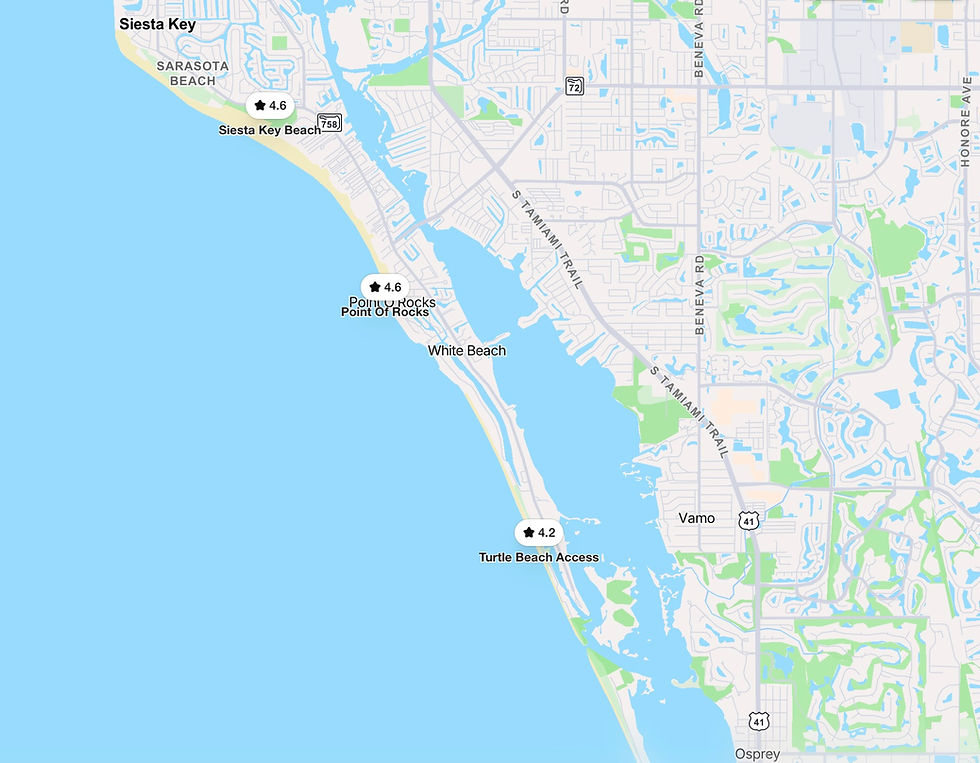
Best Places to See Sea Turtles on Siesta Key
Turtle Beach, as its name implies, is a prime nesting spot on the island. Its darker, coarser sand is preferred by nesting loggerhead turtles.
Siesta Key Beach
The renowned white-sand beach on the island is also home to numerous nests annually. Stroll along the shoreline at dawn to spot designated nesting sites and new tracks.
Point of Rocks
Although Point of Rocks isn't a nesting beach, it's an excellent spot for snorkeling. When conditions are calm, visitors sometimes see sea turtles feeding in the seagrass beds nearby.
Mote Marine
Visit Mote Marine's newest location, Mote SEA, to observe resident sea turtles in a controlled environment. The Florida's Gulf Coast Gallery is dedicated to informing visitors about the Gulf Coast's marine life, the dangers these endangered creatures encounter, and Mote's efforts in safeguarding the sea turtle population for more than 40 years.
Can You See Baby Sea Turtles?

Yes—but only if you're extremely lucky.
Hatchlings usually emerge at night or just before sunrise between July and September. They instinctively crawl toward the brightest horizon—the Gulf of Mexico.
If you happen to witness a hatchling emergence:
Watch quietly from a distance.
Never touch or pick up hatchlings.
Avoid using flashlights or camera flashes.
How You Can Help Protect Sea Turtles

Every visitor plays an important role in protecting nesting turtles.
Before leaving the beach:
Fill in holes.
Knock down sandcastles.
Remove chairs, tents, toys, and trash.
Keep beachfront lights off or use turtle-friendly lighting.
Respect all marked nesting areas.
Small actions help give hatchlings the best chance of reaching the Gulf safely.
Make Your Visit Even More Memorable
Sea turtle season is one of the many reasons summer is such a special time to visit Siesta Key. Pair an early morning turtle walk with breakfast in Siesta Key Village, a paddleboard adventure, or a relaxing beach day for an unforgettable Florida vacation.
Whether you're staying for a weekend or an extended beach getaway, witnessing sea turtle season is an experience you'll remember long after your vacation ends.
Planning Your Siesta Key Vacation?
Looking for the perfect place to stay? Browse our collection of luxury Siesta Key vacation rentals,
located just steps from the beach and close to the island's best dining, shopping, and outdoor adventures.

We hope you'll enjoy everything Siesta Key has to offer—while helping protect the sea turtles that call it home.
ⓕ Follow us on Facebook for more Siesta Key tips & updates! 🌴

Comments